
Her first brush with fame came when she taught a chicken to walk backward. Mary Flannery O’Connor was just six years old when the Pathé newsreel people heard about her and filmed a segment featuring the remarkable feat of chicken training. Years later, as a famous author, and after having dropped the first name Mary for Flannery, she remembered, “I was just there to assist the chicken, but it was the high point of my life. Everything since has been an anticlimax.”
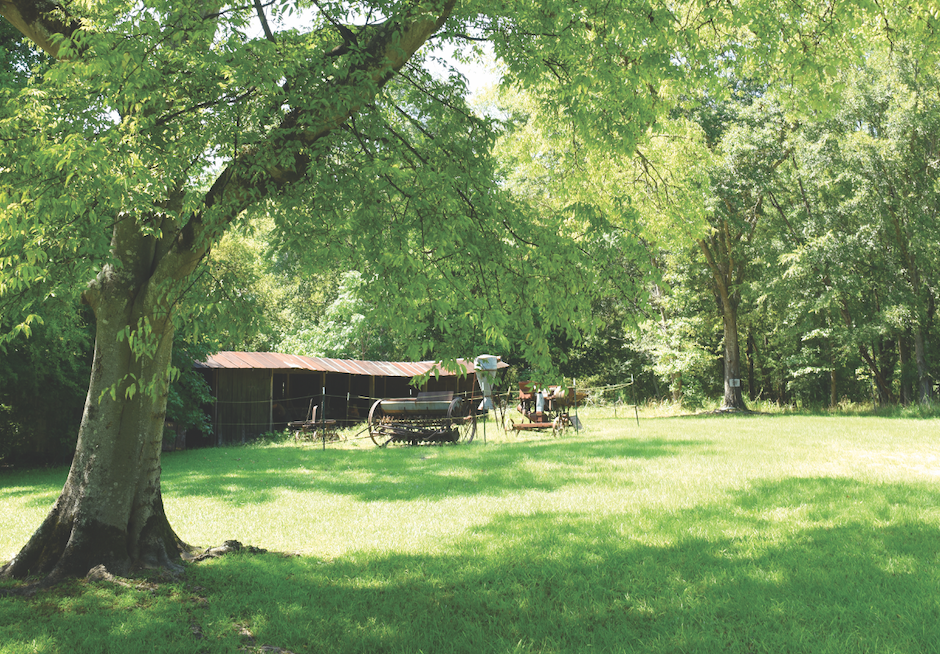
Some would argue O’Connor’s self-avowal. By the time she died of lupus at age 39 in 1964, she had become one of the most famous writers in America. She wrote most of the short stories that startled the literary world on her mother’s farm, Andalusia, outside Milledgeville, just two hours west of Augusta. Andalusia is now a national heritage site administered by Georgia College and State University (GCSU). It has also become a pilgrimage location for legions of Southern Gothic readers and travelers curious about this farm whose most famous product was not cattle but fiction.
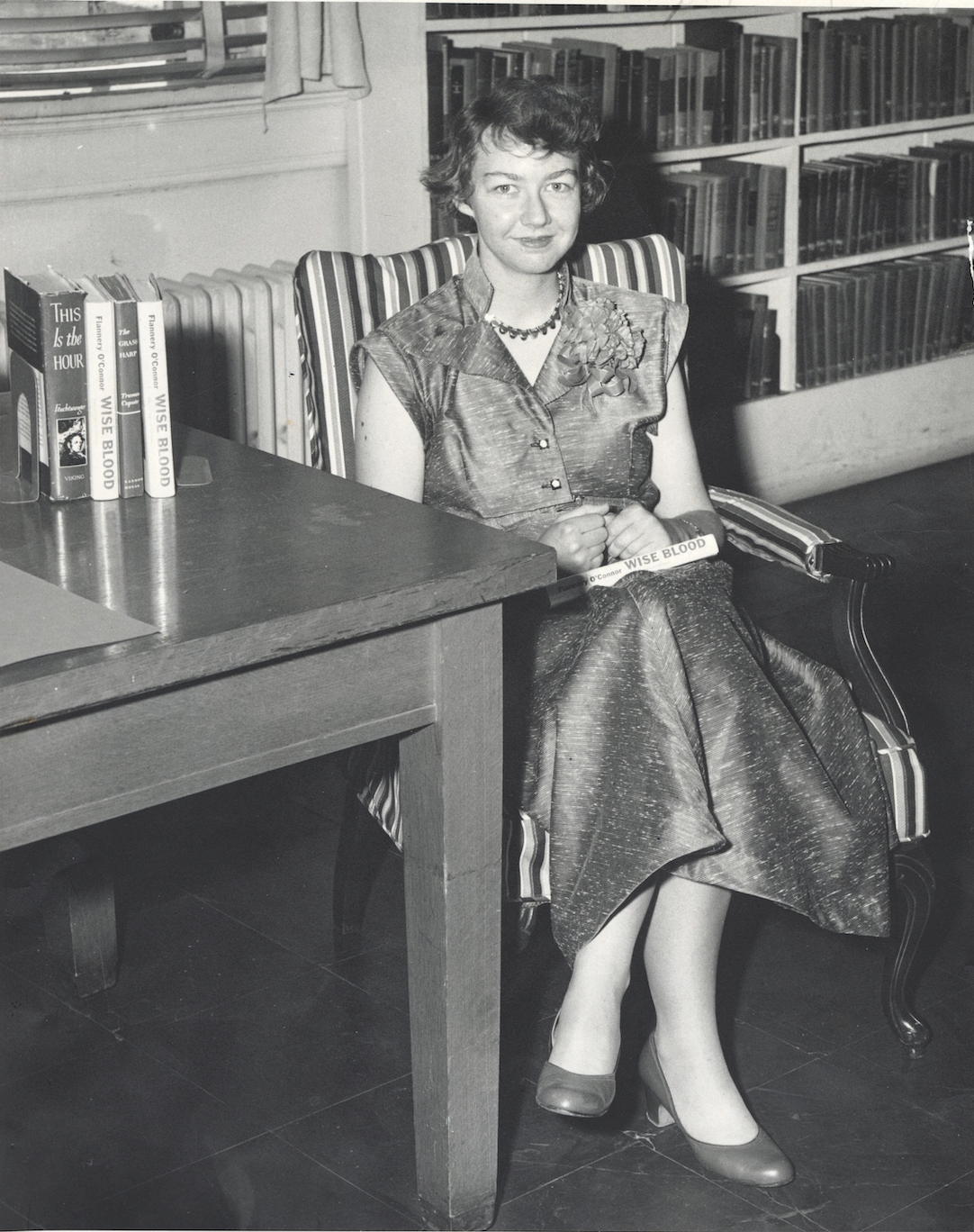
O’Connor’s fame as a writer has outlasted her celebrity as a chicken trainer. Now, 60 years after her death, film star Ethan Hawke and daughter Maya have been vocal about their fascination with O’Connor — their new movie, Wildcat, tries to plumb the mysteries of her creative life and unsentimental Christian vision.
O’Connor was born in Savannah, Ga., in 1925 in the Catholic enclave around Lafayette Square. She attended Catholic school, but when she was 12, her father, George, was diagnosed with lupus. The family moved to her mother’s hometown of Milledgeville in 1940 and George O’Connor died the following year.
In 1945, O’Connor graduated from what is now GCSU where she was a cartoonist and writer for the student newspaper. She went on to the Iowa Writers’ Workshop, but her Southern accent was strong and her shyness so profound that when it was her turn to read her work, her instructor read it for her. Yet, the faculty recognized the extraordinary power of her fiction and helped develop her style and confidence.
She moved to the New York area and finished her novel Wise Blood, but in 1950 she became so weak she could barely lift her arms. When she got off the train headed back home to Georgia, the uncle who came to pick her up didn’t even recognize her. His 25-year-old niece looked like an old man. O’Connor was diagnosed with lupus, like her father. She and her mother, Regina, moved out to the family’s 544-acre farm in 1951 where O’Connor would spend the last 13 years of her life — far from the coveted literary world of New York.
Not prone to feeling self-pity, O’Connor saw her disability and exile as a blessing. She and her mother attended Mass in Milledgeville every morning. After breakfast, she spent the rest of the morning writing at home. She rested and read in the afternoon while her mother managed the farm. The novelist continued to host plenty of visitors, gave lectures and readings around the country, and traveled abroad when her health permitted.

For the full article, pick up a copy of our November/December 2024 issue on stands.