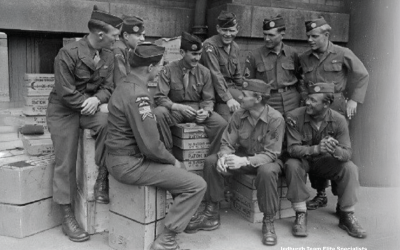

Throughout the past several years, Augusta has proven to be a more than suitable site for orchid shows (The Mule) and espionage (Agent Game), for big league baseball dreams (The Royal) and small-town coming-of-age scenes (The Hill) — all in the name of movie magic.
It’s no secret that Georgia’s generous film tax credit passed in 2005 and raised to a 20 percent rate (with the possibility of a 10 percent promotional bump) in 2008, has attracted many film and television production crews to the state. In 2007, approximately $135 million was spent by productions in Georgia and this year will see an estimated $4.1 billion in direct spends. And while most productions, and the industry infrastructure growth, have remained in and around Atlanta, Augusta has — and continues to see — production companies looking toward the Garden City for inspiration and locations.
Warren Ostergard, a film producer with more than 40 professional credits to his name, has made three films (The Hill, The Royal and Agent Game) in Augusta, and said that, beyond the tax credits, Augusta offers a unique set of criteria that filmmakers — particularly filmmakers working on a tighter budget — find appealing.
“Augusta is a little bit of everything — an open canvas,” he says. “It lends itself well to period pieces and can also be used as a contemporary setting. It’s easy to get around and it is less expensive. I mean, just renting a parking lot — an important asset when you are making a movie — will cost five to 10 times more in Atlanta. That’s important when you are working with a smaller budget.”
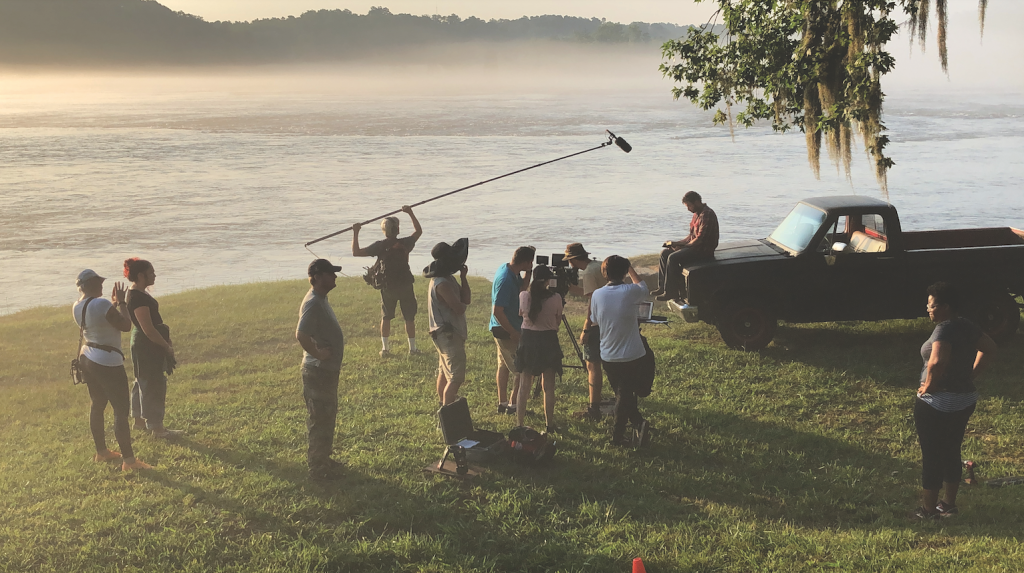
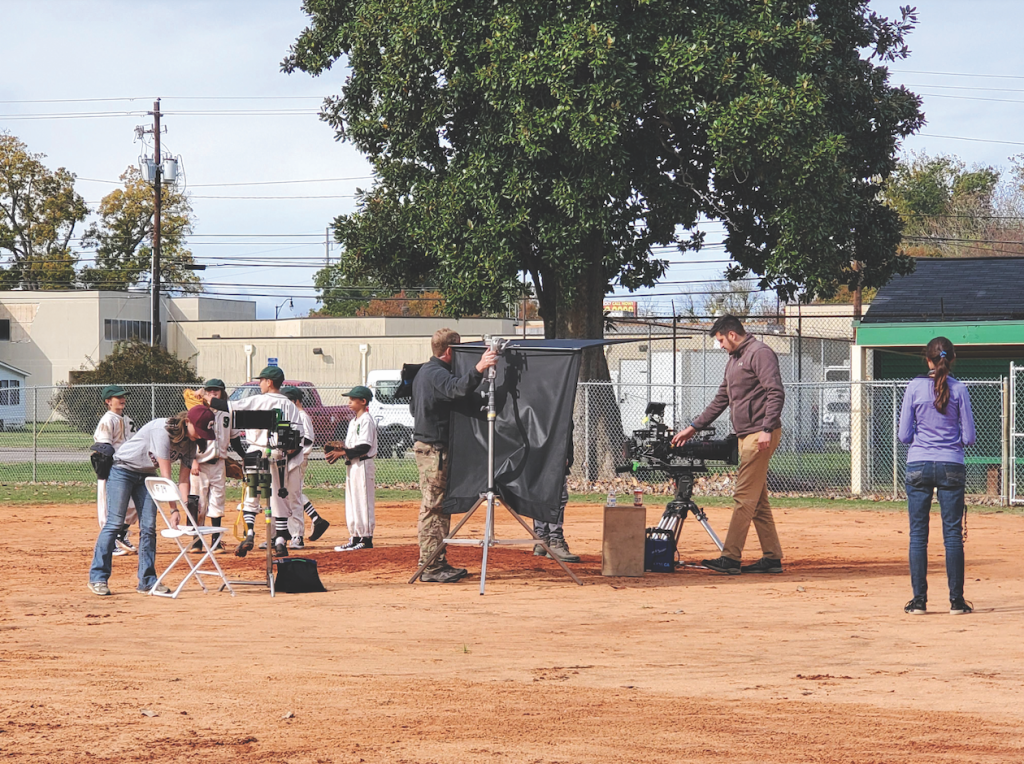
The projects Ostergard has filmed in Augusta have all been smaller films, although often with significant Hollywood names attached. He had Mel Gibson in a panic not far from the front entrance of the Miller Theater and Dennis Quaid watching a ballgame at the old GreenJackets stadium on Lake Olmstead. Ostergard said that while he has chosen, and plans to continue, to shoot in Augusta, those smaller films are the productions best suited for the area.
“To be honest, right now those are the movies we are trying to attract,” says Jennifer Bowen, film liaison at the Augusta Film Commission, a division of the Augusta Convention & Visitors Bureau. “We would love to see bigger films come to Augusta, but right now movies with an $8 to $10 million budget work well here. We would love to see more of those.”
Ostergard is currently working on what he believes will be an important next step in Augusta’s filmmaking evolution: a dedicated facility specifically built for production. “That’s what Augusta is lacking — infrastructure,” he notes. “A facility would make Augusta legitimate. Right now, finding office space, warehouse space, and certainly space that can serve as a soundstage is challenging. When that is built, an economy will develop around it.”
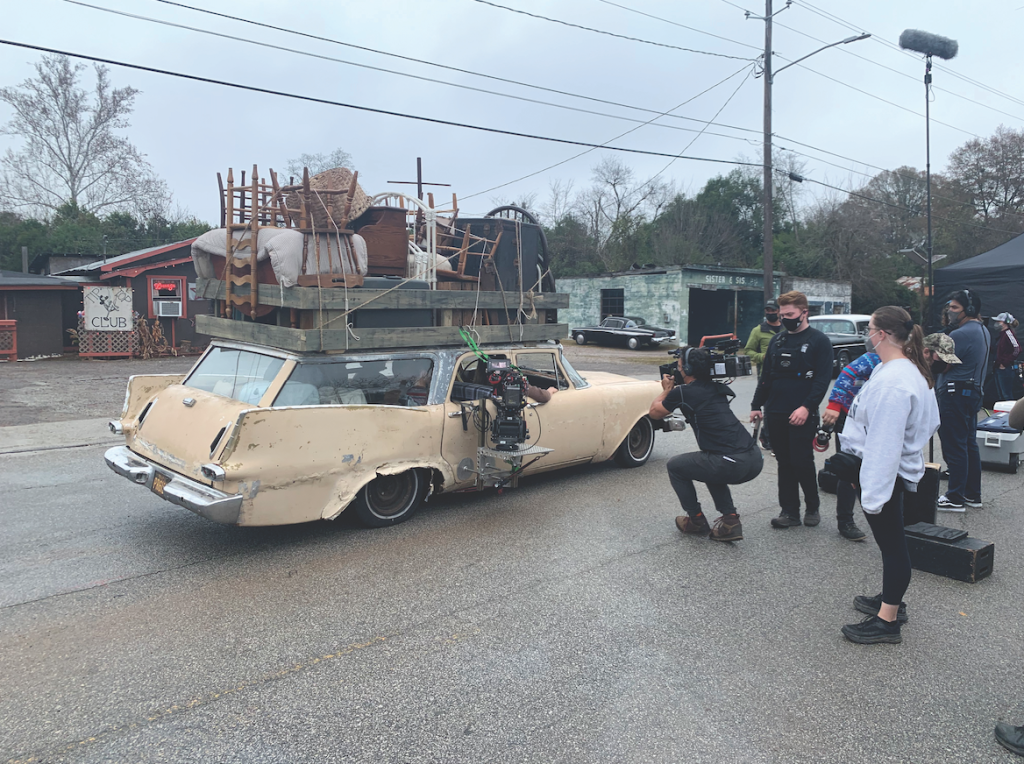
Ostergard, who also opened Black Bear Studios in Charleston, S.C., says the facility he is working to build in Augusta would feature 50 to 60 thousand square feet of soundstages, office spaces and warehouse space, facilities for construction and room for a backlot. He says that while raising money for the endeavor has its challenges, what he has found is enthusiasm from professionals both outside and within the Augusta area.
“The talent I’ve brought here really likes Augusta,” he says. They like the more laid-back environment, the slower pace. And they really like being able to find parking,” he adds, laughing.
Independent filmmaker Nick Laws has worked in the sound department for many of the films shot in the area, including The Hill. He said that while Atlanta attracts more behind-the-scenes talent, he has every intention of continuing to ply his trade from Augusta.
“It’s really good to be able to work in the film industry in my own backyard,” he says. “Yes, there are opportunities in Atlanta, but for me personally that is not appealing. I’ve never considered going to Atlanta. This is my home and that makes a lot of difference in how I feel about the work.”
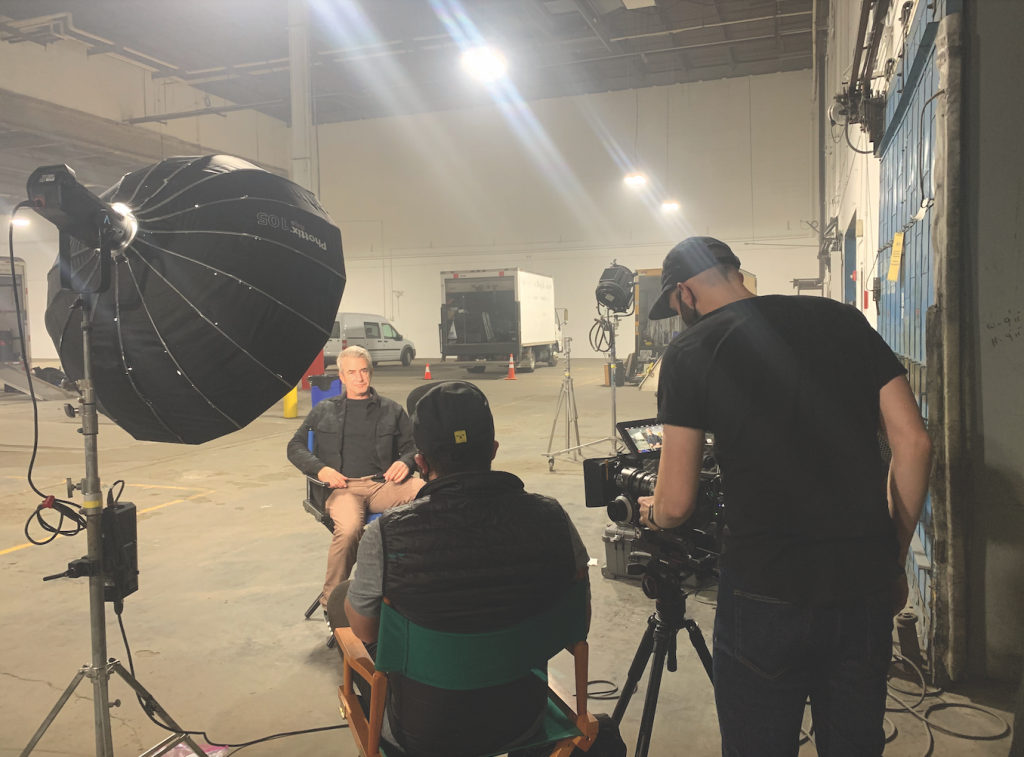
Laws, who also ran the defunct-but-still-beloved Sector 7G all-ages music venue for several years, said that part of the appeal of productions coming to the city to shoot is the opportunity it gives to local professionals who previously took a more DIY approach to making movies in Augusta.
“It’s the punk rock mentality,” he adds. “You listen to a record and say, ‘I can do that.’ Making our movies was — is — the same. It’s something that’s done for the love of the art. So, it’s great when you find yourself working on these bigger projects and find yourself working with friends, people you know that feel the same way. We are building that community.”
Bowen says watching local professionals such as Laws find employment and, in turn, education on larger productions has been as impactful as the economic contributions those projects represent. She mentions that having not only locations but also crews, permitting and the other countless details required to make movies is essential for a community designated by the Georgia Film Office as Camera Ready (a special designation allowing communities to be promoted as filming destination).
“Camera Ready communities have a program in place that provides film and television companies with easier, faster and better access to local resources and location information,” Lee Thomas, Director of the Georgia Film Office explains. “Each community has a Camera Ready liaison in place that can assist film and television production companies on a local level.” It is having those guidelines, well-defined and put in place, Bowen states, that has made Augusta ready for action.
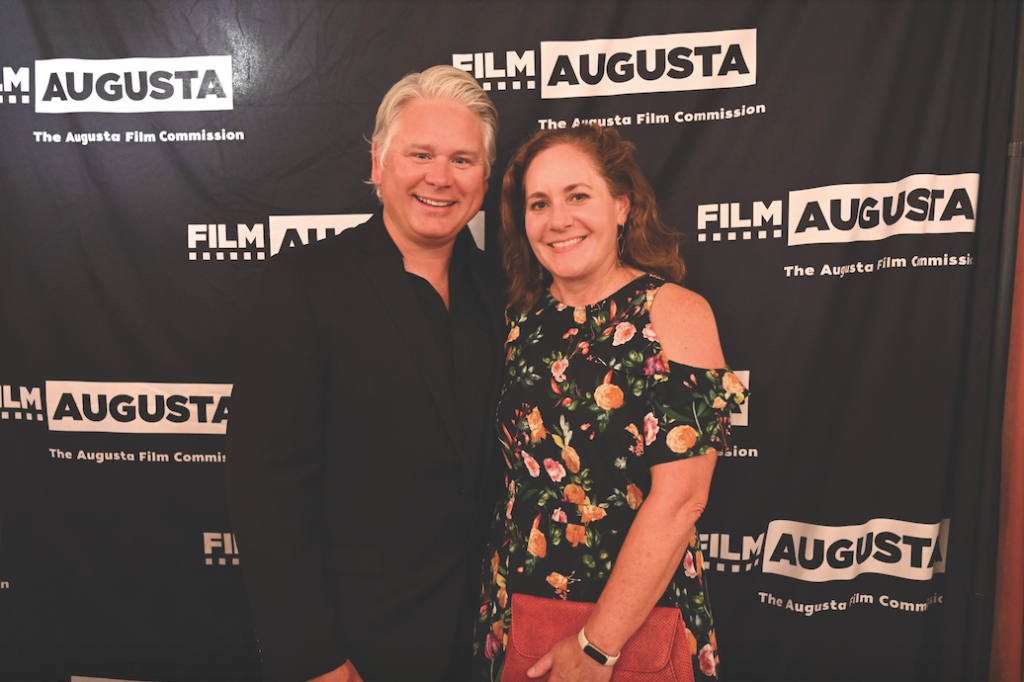

Augusta native and Chicago Fire actor Maurice Johnson
Photos courtesy of Film Augusta
Seen in the February/March 2024 issue of Augusta magazine.