
Expert tips for creating unforgettable style whatever your square footage
By Margaret Daniel
Photos by Jane Kortright Photography
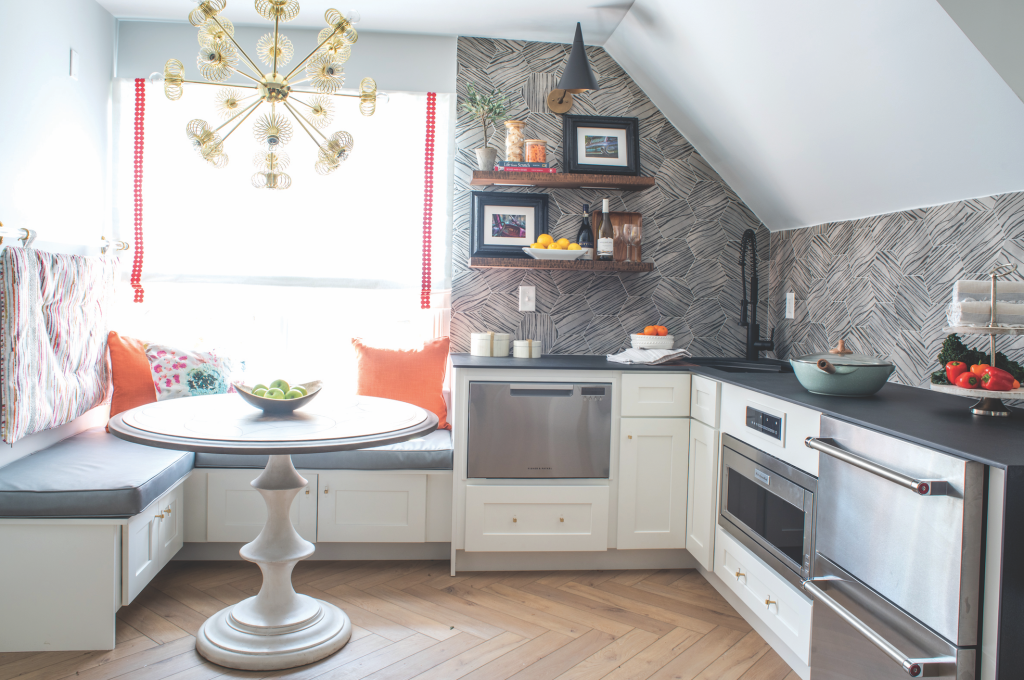
Designing small spaces feels downright daunting. Tiny kitchens with too few cabinets, windowless powder baths, laundry rooms threatening claustrophobia and living rooms with low ceilings present design challenges. Throw in budget constraints or limited storage, and the task of marrying high design with strict programming demands can feel nearly impossible.
To ease these common decoration anxieties, we tapped three local designers for their small space planning tips and tricks to help first-time renters or homebuyers fill their spaces with confidence.

Design Foundations
“The first part of living in a space is making a decision about what you are going to do [there]. It is critical to figure out your zones of life. The second part is how you want it to feel when you come in,” says Aiken designer, Susan Victor, co-owner and interior designer at Nandina Home & Design.
Victor recommends a detailed furniture plan for the whole house. Even if your budget prohibits tackling the whole project at once, making a list of the keepsake heirlooms along with a list of furniture and decor needs starts the process. To create a confident and personalized plan, she recommends scouring design books and utilizing Pinterest to develop your taste and train your eye.
“You want a home that fits you, that expresses your personality, that is authentic,” Victor says.
If the limitless inspiration online becomes too confusing, turn to your wardrobe for guidance. “If you are more of a tailored-type person, you probably love a home that looks a little more like that,” Victor says. “If you associate everything that’s happy in your life with the beach and having water-colored things around you, then that’s something you might lean into.”
Backdrop Basics
Armed with a plan and inspiration board, give your walls, ceilings and floors special consideration. Large area rugs and drapes hung just below crown molding visually extend the floor area and ceiling height without architectural modifications.
For monumental impact on a minuscule budget, Meghan Thigpen, interior designer at Cheatham Fletcher Scott Architects + Designers, recommends the appeal of paint.
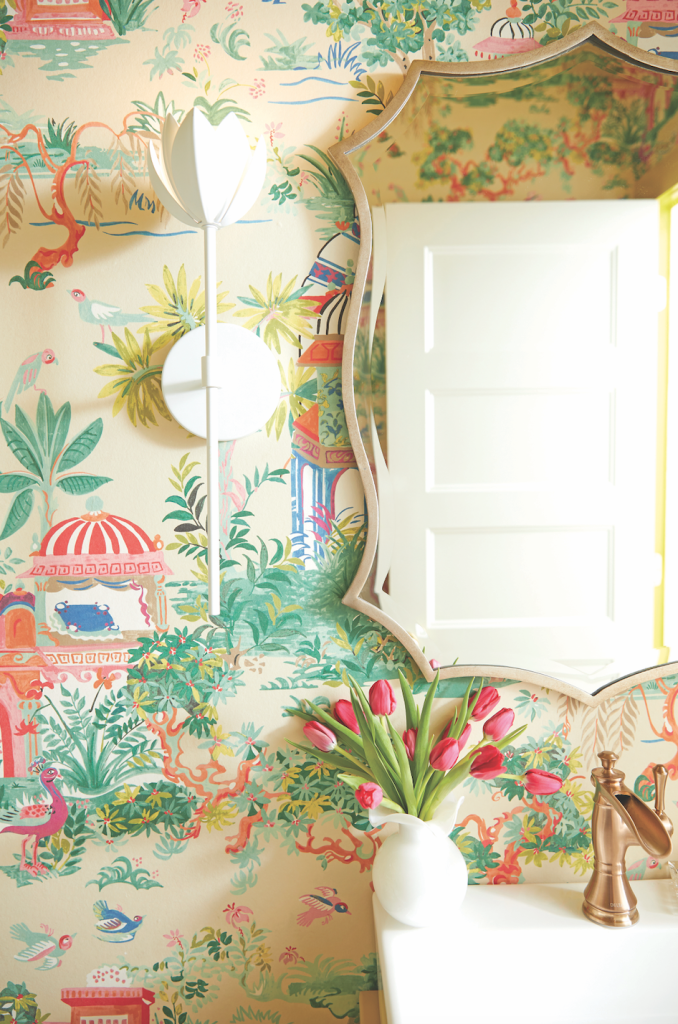
“A lot of people will tell you to paint small spaces light colors, but I do the opposite. I love to go loud, making small spaces dark, moody and cozy,” Thigpen says. “With small powder rooms and laundry rooms, people are more willing to be talked into going crazy [with color], and from there, they become obsessed.”
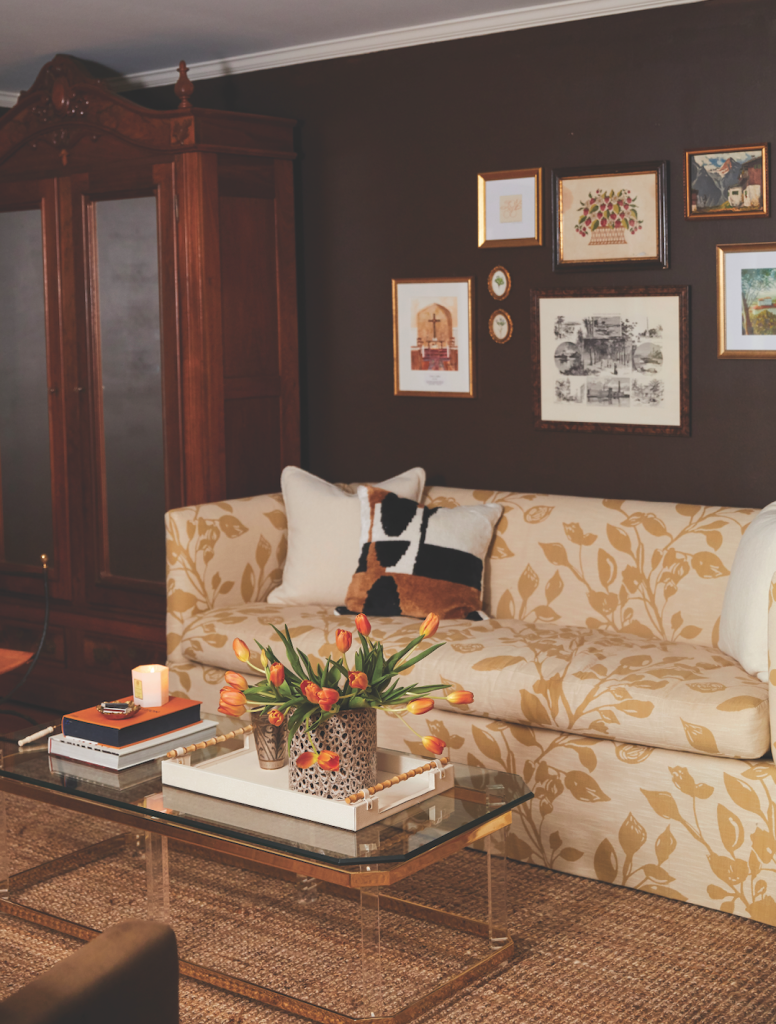
Instead of making the room seem smaller, deep hues and wildly patterned wallpapers help corners to disappear, making the room bigger visually. To further the effect, Thigpen paints the fifth wall — as the ceiling is often called — to match the doors and trim. “It keeps it intimate,” she notes.

Perfectly Collected
With 36% of Americans renting and one in four moving every five years, hefty investments in permanent touches like wallpaper, room-specific custom draperies and American-made furnishings can be hard to stomach. To keep your small spaces from feeling more like a dorm than a stylish dwelling, designers recommend mixing retail finds with well-made staple pieces.
“I think there is a balance. You do have to invest in a few nice things to make your not-so-nice things look [good],” Thigpen concedes.
Allocating the majority of her budget to her entertaining spaces, the designer splurged on a pair of upholstered swivel chairs that will follow her and Daniel, her husband, to their next home, and saved on drapes, creatively upgrading simple white panels from Ikea with drapery pins, mounting them on stylish hardware from Ballard Designs.
To curb costs, Thigpen recommends thinking vintage. “A lot of thrift stores have draperies that you can [buy] and have altered if draperies are not in your budget.”
Additionally, shopping for pre-owned pieces lowers your home’s environmental impact thanks to their solid construction and longevity, while also being well-suited to tiny living, as sofas and armchairs boasted petite proportions in decades past.
The key to fruitful antiquing online and in-store is shopping often — with a list in hand — and purchasing high-quality pieces that warrant recovering instead of replacing, says Augusta-based designer, Emily Wiley, Emily Wiley Interiors.
“When I lived in Chicago, I would grab a coffee and hit a couple of antique shops on [Saturday] mornings,” she says, which yielded Bertoia dining chairs, a glass and brass coffee table, and lots of original artworks. They are pieces that allowed her and her husband Ashton to thoughtfully create a plan for their West Augusta home.
“Make a list of the things you are going to use more often and check them off the list in that order. I did that, but I think if something had come up that was really fantastic, I would probably have jumped on it first,” Wiley says. “When you are hunting on Facebook Marketplace or at antique stores where things change often, you should jump on that diamond-in-the-rough before going for the more practical thing.”
Top It Off
With essential storage pieces and furnishings in place, pack your small spaces with stylish accessories like framed art and coffee table books.
“[Books] are a great foundation for layering, and I love flipping through them for inspiration,” Wiley says. Tomes with stylish covers look elegant packed on a bookshelf; larger design or travel volumes perfectly anchor small tabletop accessories like candles and dishes of sentimental matchbooks. Books, like your favorite fragrance and ephemera, “tell a story,” Thigpen adds.
And just as with furnishings, the mix makes for visual interest. “If you are going to do a gallery wall, invest in a piece of original art from a street vendor at a fair in your own community, and mix that with art you pick up at TJ Maxx. Go to Home Goods and find a great pair of lamps or ready-made pillows [to] easily change out the colors of a room,” Victor says. “[Doing that] you can come up with really layered, rich design that most people would have no idea what’s original, what’s expensive, and what’s not.”
For maximum design appeal, regardless of the space’s size and quirks, Victor’s favorite tip is free, “You need to really fall in love with [your] things.”
Seen in the January 2024 issue of Augusta magazine.