

With this issue of Augusta magazine, we introduce a new series called Where the Road Takes Us. The idea is simple: two down-to-earth guys hitting the road to explore some remote Southern locations in Georgia and South Carolina. Videographer Mark Albertin and narrator Jim Garvey, the tour guides, are regenerating lore, fascination and public interest in the South through the storytelling of small-town locals.
Where the Road Takes Us includes a YouTube video and a written feature in the magazine. Come along for the ride and experience the hidden South coming to life through history, personalities and an occasional pint of Appalachian firewater. It’s all about following the dirt road to the next destination.
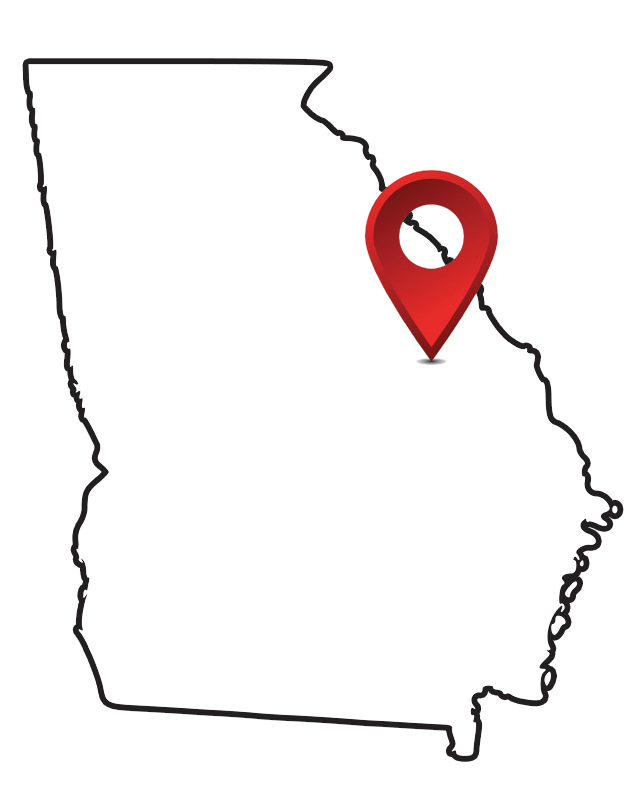
Quaker Road, a thin ribbon of concrete meandering through a green world 40 minutes south of Augusta in northern Burke County, winds past pecan groves, pastures and plowed fields. And then a few houses appear, a brick church, and across the road, perched at the edge of hundreds of acres of fields and forest, is a cluster of buildings, some of them crumbling after decades of abandonment. You have reached a place of miracles.
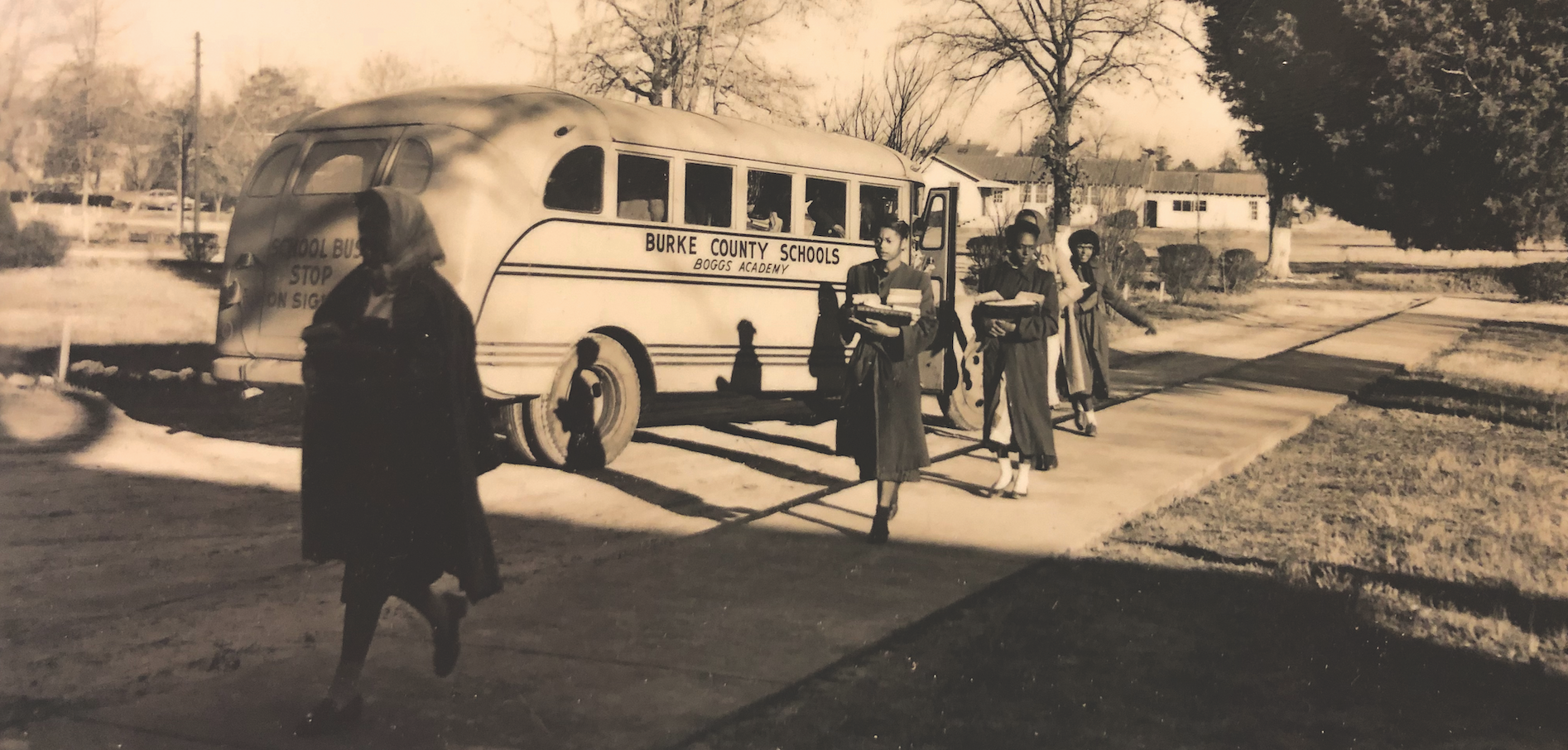
This place was Boggs Academy. From 1906 to 1986, the little collection of buildings bubbled with the energy of children and youth playing ball, eating in the cafeteria, crossing Quaker Road for chapel services, horsing around in dorm rooms, performing required manual labor around campus, studying in the library and developing the skills which would prepare them for a place in society. But for many years, their society feared and demeaned them, for these students were Black.
In 1906, Boggs Academy was conceived as an outreach of the Presbyterian Church (U.S.A.) to the descendants of freed slaves. Not much had improved for those freedmen and their families since “freedom” came some 41 years before the end of the Civil War. Most of these children grew up in the ramshackle, unpainted shacks that were rented to tenant farmers working land they would never own for landowners who kept them poor, powerless and humiliated by Jim Crow laws and customs.
Periodic lynchings in the early 20th century — about one per month in Georgia — reminded African Americans of the kind of justice their freedom afforded them. And in the year of the academy’s founding, white Atlantans, fired into a frenzy of racial hatred, rioted for three days killing dozens of Black Atlantans — no one knows how many.
Yet, a few miles outside of Keysville in a corner of rural Burke County where almost no opportunity for education existed for Black children, there emerged Boggs Academy. New hope for possibilities shone like a light on Quaker Road.
The academy officially opened in a newly built chapel on some land donated by Black farmers in 1907. Five ragged, barefoot children from neighboring farms and plantations enrolled. But soon, with donations from the Presbyterian Church and residents, new buildings went up, and boarders and day students flocked to the school. The Ku Klux Klan burned crosses and tried to intimidate the students, but the developing school flourished with enrollment peaking around 200 in the 1960s.
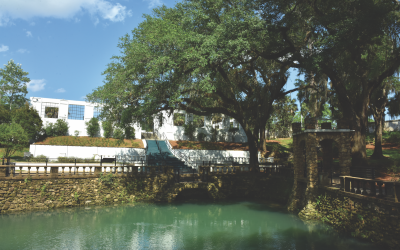
Eventually, the campus grew to 60 acres with 16 buildings to include student dorms, classrooms, a dining hall, a gym, a chapel, a shop, athletic fields, barns, and cottages for faculty and staff. Beyond the campus sprawled the school’s 1,000 acres of farmland and forest.
The farm provided an important part of the enrollment experience, especially in the early years. Students worked off their tuition and developed agricultural skills by milking the cows, feeding hogs and goats and canning the vegetables, supplying the school’s cafeteria with farm-to-table meals before the concept existed.
“The Boggs experience” was an essential part of the educational program, requiring students to work on campus for at least one class period per day, washing dishes in the kitchen, mowing grass, sweeping floors, or tending livestock. Students rose early, went to chapel, attended classes until 4 p.m., had free time for sports, recreation, clubs and other activities, and then returned to the dorms by 9:30 p.m., lights-out at 10 p.m. They learned discipline and responsibility in the structured environment.
The environment also produced a tight-knit family. Way out in the country, students had no choice but to make Boggs Academy their closest community — classmates as brothers and sisters, and the natural world their home. Today, 37 years after the school’s closing, those ties continue in the Boggs Academy Alumni Association.
As society changed, so did Boggs Academy. With integration, African American children from the area could go to public schools. So, the academy shifted focus and became one of the finest Black prep schools in the nation. With 95 percent of its graduates going to college, Boggs drew middle-class students from the United States and abroad. But with the school serving fewer disadvantaged students, the Presbyterian Church began cutting its financial support. The center of learning struggled to survive and, in 1986, Boggs Academy closed its doors … but not completely.
A small group of alumni convinced the Presbyterian Church to keep the property. In 1991, they reached a covenant agreement with the denomination to turn the academy into the Boggs Rural Life Center, a nonprofit serving the local community. It has housed a drug treatment facility for adolescent boys, hosted community picnics, retreats, celebrations, meetings and other gatherings. Working with Boggs alumni, the University of Georgia, the Presbyterian Church, Burke County and other entities, the Boggs Rural Life Center honors its historic legacy while seeking new ways to serve the agricultural community in which it is rooted.
The old academy gave generations of Black children wings to escape the circumstances of poverty and prejudice that trapped them. Today, rural decline, drug addiction, and spiritual poverty create their own contemporary traps. Perhaps those old values — the stewardship of the soil, the creativity of rural living, the personal bonds nurtured by community gatherings — can help revive hope and vitality in this beautiful countryside. The Boggs Rural Life Center stands upon what many consider holy ground.
It might be a place of miracles still.
A post-press correction: Though supported by the Presbyterian Church, Boggs Academy was founded by the Reverend John Lawrence Phelps, a black Presbyterian minister and graduate of Biddle University and Paine College. He named the school to honor Mrs. Virginia P. Boggs, a white friend and supporter of his when he was student at Biddle. Mrs. Boggs was Secretary of the Presbyterian Board of Missions for Freedmen. Boggs Academy closed in 1986.
For the full print story, pick up a copy of our November/December 2023 issue on stands.