
Paceline Ride 2021
The annual Paceline Ride is a casual and fun bike ride designed to raise funds for the Georgia Cancer Center. PaceDay 2021 is happening October 16 in Augusta. Once registered, bikers can choose between a 25, 50 or 100-mile route. Each linear route features beautiful Georgian scenery, supportive volunteers, and multiple rest stops along the way. This year, all routes will finish at the Columbia County Amphitheater in Evans where riders can relax, grab a bite to eat and drink, and listen to live entertainment.
Paceline encourages participants to ride in groups, hence the definition of “paceline.” The word is a biking term meaning “a formation in which bikers travel in a line, one close behind the other, in order to conserve energy by riding in the draft of the riders in front.”
The ride is about companionship and community, rather than athleticism and competition. With a goal of raising $500,000 this year, the Paceline Ride earns its reputation as “Georgia’s ride to end cancer.”
(Photo courtesy of Paceline)
 ArtsCity Festival
With the pandemic still effecting so many people and small businesses, the Greater Augusta Arts Council has decided to host a “mini” Arts in the Heart Festival this year, appropriately titled ArtsCity Festival.
The three-day event will be held September 17-19 in downtown Augusta with more than 100 vendors participating with proper social-distancing guidelines in place. Two festival will also feature two stages offering non-stop entertainment. A limited number of popular international food booths are participating, as well as take-out from downtown restaurant partners.
With this year’s event will most certainly look different, the Arts Council is excited about this smaller version of Augusta’s favorite festival!
(Photo courtesy of REDWolf)
Getaways | Charleston
By Hailea Boykin
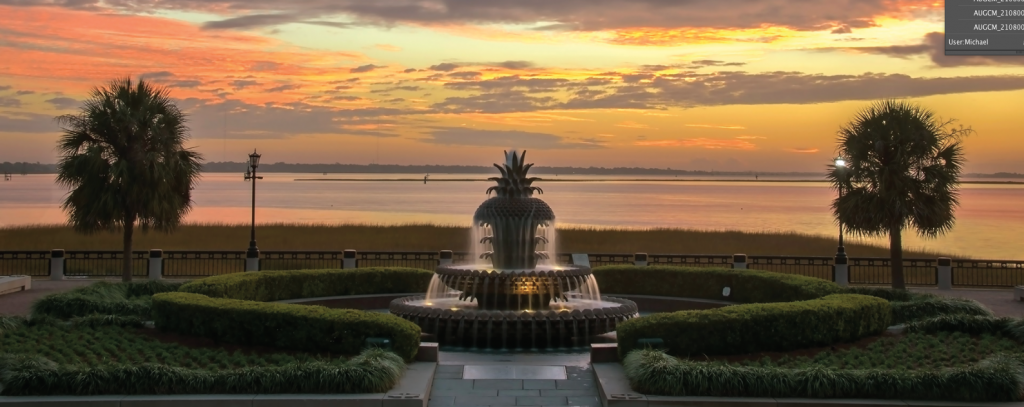
If you’re willing to take a bit of a drive and do some walking, Charleston may be the perfect lively, historic city you’ve been looking to spend some time in. As one of the most historic cities in the U.S., Charleston, S.C., is a great area to experience Southern history. Antebellum houses, cobblestone streets and horse drawn carriages are part of Charleston’s charm today but they all hold a great deal of horror and history within them.
What to Do
Folly Beach – Welcome to the edge of America! With a pier stretching more than 1,000 feet into the ocean, Folly Beach is a great place to spend the day in the salty sea. Be sure to pack sunscreen and keep a lookout for the pelicans! If you’re not into getting your feet wet, or just want to stop for a few hours, the Folly Beach shops are filled with surf knickknacks and souvenirs to remember your trip.
Charleston Ghost Tours – There are different ghost tours given throughout Charleston with many different routes, stops and stories. Though most of these tours don’t venture into the haunted areas, the stories are honest and brutal and they help remind everyone of Charleston’s history.
Walk Downtown – The Charleston architecture is definitely something that catches people’s eye. With over 2,500 historical buildings in the area, the Charleston homes and buildings have unique styles and color palettes that you most likely won’t see anywhere else. Some storefronts have been renovated to fix their architectural integrity, but have kept the historic style. Many homes in the area were built sideways in rows as a way of saving space and some have the pleasure of being seated across from the river. Though of course, with the iconic and historic style home comes a massive price tag. Be sure to stop and check out the infamous Rainbow Row of homes!
Where to Eat
Hyman’s Seafood – Around since 1890, Hyman’s Seafood is a lovely fourth generation restaurant focused on customer satisfaction. They have two rules: one, the customer is always right, and two, when in doubt refer back to rule one! Hyman’s Seafood has caught the eyes of many celebrities. So much so, they have decorated the tables and plates on the walls with the names of celebrities, like James Brown and Neil Armstrong, who have dined with them. If I was to name them all, they’d take up the rest of this page!
Lewis Barbeque – The south wouldn’t be the same without barbeque and the line of patrons snaking through the parking lot of Lewis Barbecue would agree. Though the length of the line may be daunting for those who get “hangry”, once you taste the expertly smoked pork, beef brisket, beef ribs or “Texas Hot Guts” sausage, the wait will have been well worth it. With all the proper Texas Southern smoked staples, there is something for everyone to enjoy – even a beef rib as big as your head!
Off Track Ice Cream – Enjoy an after dinner treat at Off Track Ice Cream. All of their traditional and vegan ice cream flavors are made from scratch, in house, with ingredients from local farmers, purveyors and chefs. With each batch of ice cream, the ingredients and their source are listed for everyone to see. Talk about supporting the community!
Where to Stay
Charleston and the surrounding area has plenty of hotels and air bnbs to select from. As the largest city in South Carolina, the population of visitors and tourists is ever growing and there are always activities that keep people coming back. Whether you stay inside or just outside the city there are a wide range of options to fit everyone’s budget.
—–
I Recommend:
Hampton Inn & Suites Charleston Airport
3020 W Montague Ave,
North Charleston, SC 29418
(843) 990-5100
Home2 Suites by Hilton Charles Daniel Island
120 Fairchild St,
Daniel Island, SC 29492
(843) 981-5800
Cambria Hotel MountPleasant Charleston
1472 N Hwy 17,
Mt Pleasant, SC 29464
(843) 849-9677
(Photos courtesy of Source Code Escape Games – Facebook)
 Let’s All Go BackTo College
By Steven Uhles
Augusta has, for as long as I can remember, struggled with identity. It has certainly tried on a lot of hats – Golf Mecca, Cyber City, Garden City – but none of these handy identifiers ever seem to stick. I’ve been guilty of trying to hang descriptors on Augusta myself with my favorite being City of Potential, an admittedly giant cop out. But the truth is, despite identifying and amplifying its many resources over the years – history, tradition, leisure activities, a variety of industries, the river, the architecture – nothing seems to stick. Certainly nothing that has proven to be that sure-fire attractor that transform a community from a place people to live to a place people aspire to live.
And that’s a shame. Because I think the answer to Augusta’s identity issue may have been sitting right under our noses the entire time. I also believe there are more than 21,000 people that might agree with me.
I think Augusta can be a college town.
For me, the coolest communities and the places I am most likely to want to spend time in have always been college towns. Athens. Austin. Bellingham, Wash., where I in fact did go to college, are places that feel enchanted, smart and eternally youthful even if I am not. They embrace the artists, the makers and musicians, but more than that they embrace the creative process. They reward small business and innovation. They have an identity that becomes a proven economic driver that often succeeds without any true attractions. People visit Athens outside those few Saturdays a month not because there is an excellent roller coaster or beachfront access, but because they dig the energy. They enjoy the feeling they have when they sit outside and enjoy a meal or drink. They enjoy the history, whether educational, or perhaps just the fond memory of a band once seen.
There is, of course, a density argument to be made. Athens is a company town and that company is the University of Georgia. So many people in Athens have direct ties to the school, it is easy to believe that should UGA vanish Athens would soon follow. Fortunately, that’s an unlikely scenario. But it does pose the argument that Augusta University, with approximately 21,000 students, staff and faculty members tied to it, does not represent the same kind of school-to-citizen ratio in the Augusta area, with a population of about 600,000. But Austin, with approximately 2.2 million people in its metropolitan area and 71,000 people associated with the school, has a similar demographic breakdown.
So that begs the question, how does a town become a college town? I believe the answer is simple. It comes down to a sense of ownership.
What Athens and Austin have that Augusta does not is a focused policy of inclusion and encouragement for its university populations. There, businesses build brands with their eye on that specific demographic. They do it not to solely attract those customers, but because they understand that the unspoken cache ends up attracting a much broader base. There, property owners make low-rent spaces, unfinished and raw, available to the industrious acts, artists and other assorted cultural elevators who need only a little electricity and a reasonably reliable roof to fuel their vision. In college towns, people – associated with the school or otherwise – are provided with places to be seen, be heard, and acknowledged. It’s part of the civic model.
In short, it’s a place students, in practice and at heart, feel like they belong. More than that, it’s a place where they feel a certain sense of ownership.
Of course, there have been pockets of these kind of fertile environments in the Augusta area, particularly in the downtown corridor, that have always felt more like the exception and less like the rule. They have also, with a few exceptions, not had the sort of shelf life required to become a vital part of the community landscape. After all, Soul Bar can only carry so much weight.
So what then is the answer? The answer is easy. The answer is provide venues and spaces and opportunities that engage and excite the college audience. What’s difficult is figuring out who will provide these spaces. Who feels the kind of attachment to this community that they are willing to foster it in others? The real estate exists. What remains undiscovered country is the coalition – official or otherwise – both willing and able to provide the resources, both abstract and finite, to help Augusta reach its college town destiny.
This edition of Mezzanine was brought to you by Black Pumas, Quentin Tarantino the novelist and people crowded into a special space to see a show together.
(Photo courtesy of AUGUniversity/facebook)
Appears in the August/September 2021 issue of Augusta Magazine.